When working at height, choosing the right type of access board is essential for safety, efficiency, and compliance. Two of the most commonly used options across construction, maintenance, and refurbishment projects are timber scaffold boards and staging boards. While they serve similar purposes, they are designed for different applications. Understanding the differences can help ensure the right product is used for the job.
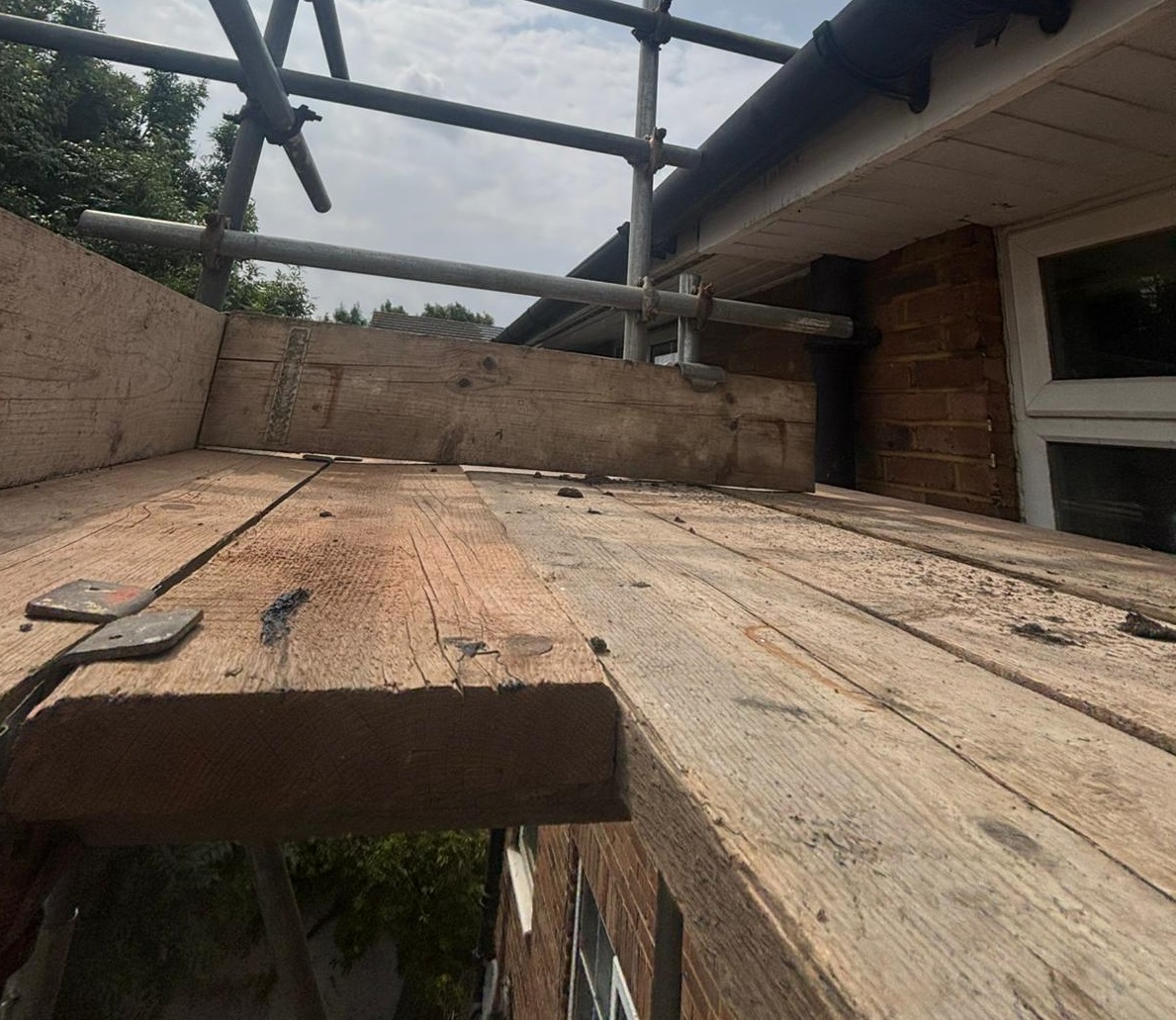
Scaffold boards are specifically designed to form working platforms on scaffold structures. Traditionally made from timber, they are widely used on construction sites, roofing projects, and industrial maintenance work throughout the UK.
These boards are manufactured to standard dimensions (225mm wide and 38mm thick), so they sit securely on scaffold tubes, providing a stable surface for operatives, tools, and materials. Timber scaffold boards are typically strength-graded and supplied in line with recognised UK standards such as BS 2482. This standard covers the manufacturing and testing of boards, including their size, strength, and safe support spacing. Using boards that meet BS 2482 helps ensure predictable performance when installed correctly, giving users confidence in the working platform. As always, proper installation and regular checks remain essential for safe use.
One of the key advantages of timber scaffold boards is their proven reliability. They have been used for decades and remain a trusted option for many contractors. However, like all timber products, they require regular inspection. Exposure to moisture, improper storage, or damage can shorten their lifespan, so ongoing checks remain essential for safe use. BS 2482 graded high-quality new scaffolding boards remain a dependable choice for traditional scaffolding applications.
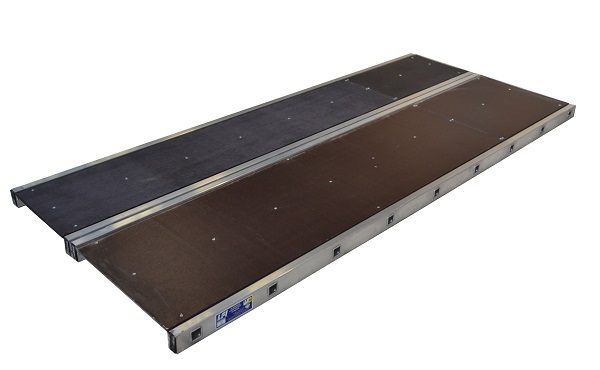
Staging boards, also known as Youngman boards, are self-contained platforms designed for temporary elevated workspaces. Unlike scaffold boards, they are not typically integrated into full scaffolding structures but are instead supported by trestles, mobile towers, or simple frames. They comply with BS 2037 standards, which focus on lightweight construction, ease of use, and safe load capacities.
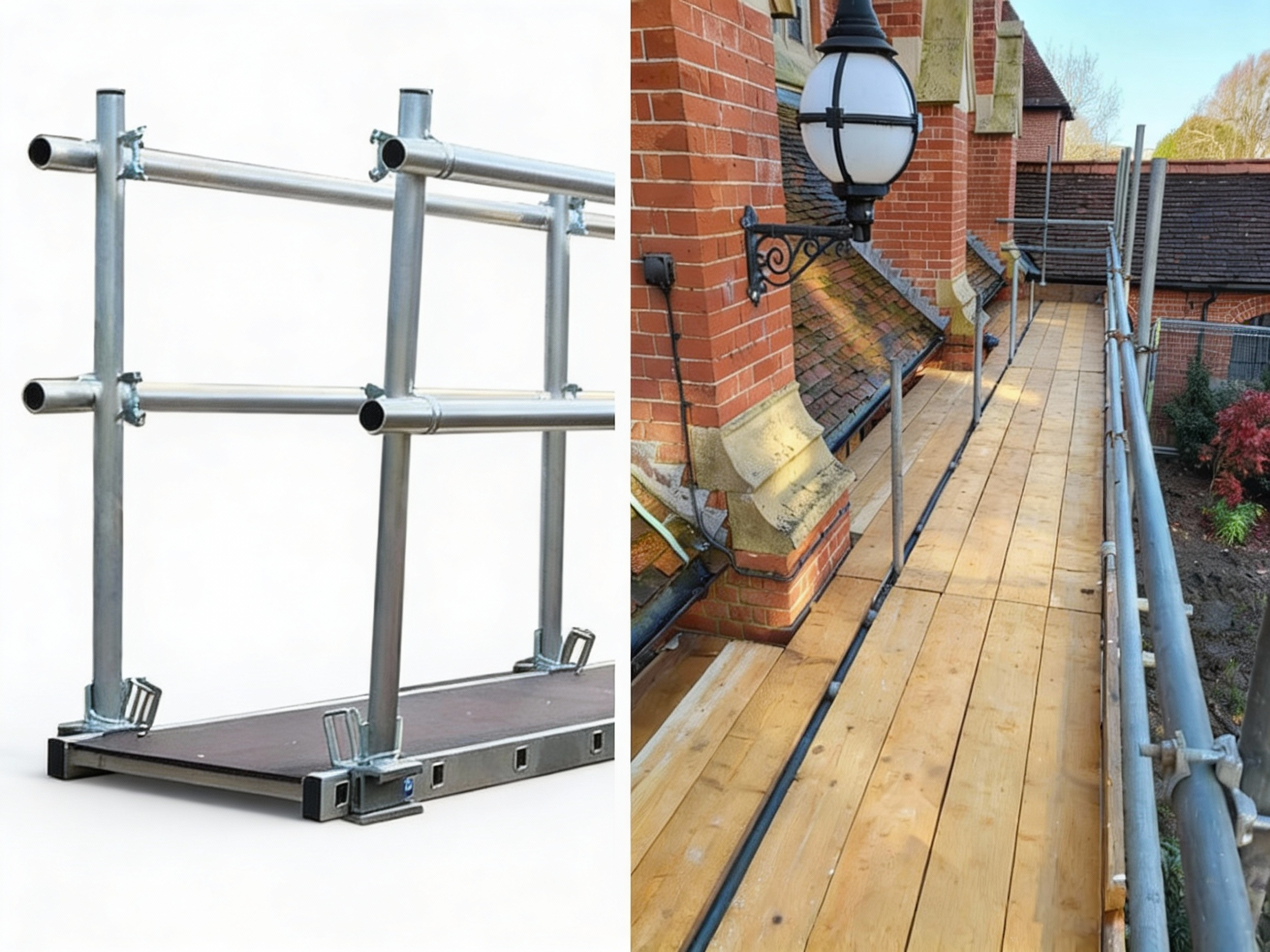
These boards are constructed with an aluminium frame surrounding a non-slip marine plywood deck, often coated with phenolic mesh for grip. Many models are explicitly designed to be weather- and boil-proof, making them suitable working platforms for both indoor and outdoor applications. Staging boards are available in wider dimensions than scaffolding boards, either 450mm or 600mm wide, and in lengths ranging from 2.4m to 6.0m. Their lightweight design (15–30kg depending on size) makes them easy to manoeuvre, while still supporting evenly distributed loads of around 270kg, enough for one to three workers.
Staging boards excel at tasks that require mobility, such as painting, decorating, plastering, or light maintenance. Their robust construction allows safe use in controlled indoor environments and in outdoor locations, including construction sites, offshore rigs, and industrial settings, provided they are properly supported. Optional integrated handrails are available for added safety at greater heights, and the all-in-one design reduces the need for multiple components, saving time and effort.
Key advantages of staging boards include portability, quick setup, and cost-effectiveness for smaller or mobile projects.
Although scaffold boards and staging boards may look similar at a glance, their applications are very different:
No matter which board type is used, safety must always come first. Boards should be suitable for their intended purpose, properly supported, and regularly inspected for damage or wear. Following load limits and correct installation procedures is essential to reduce risk and comply with health and safety regulations.
Both scaffold boards and staging boards play crucial roles in safe working at height. By understanding the differences, contractors and tradespeople can select the right board for each project, ensuring safety, efficiency, and productivity on site. Choosing the correct board type allows teams to work confidently, knowing they are using equipment designed for the job. However, if you’re also considering raised platforms for your work area, you may want to explore how scaffold towers compare to staging boards. This guide breaks down the key differences in stability, setup time, and ideal use cases to help you make the best choice.