

Galvanised steel CI sheets • 8ft & 10ft lengths • Tough corrugated profile for strength & watertight coverage • Excellent rainwater runoff & weather resistance • Long-lasting 25–60+ years • Ideal for sheds, barns, garages, warehouses, agricultural buildings & temporary roofs • Lightweight & easy to install.


At West Sussex Scaffolding, we supply a wide range of corrugated roofing sheets, perfect for agricultural buildings, sheds, warehouses, barns, shelters, and temporary structures. Designed for long-lasting performance, these sheets are lightweight, strong, and weather-resistant, offering a cost-effective solution for almost any roofing or cladding project.
Our corrugated sheets are available in various materials, sizes, and profiles, including metal options, so that you can choose the right type for your building’s needs. They are ideal for sloping roofs, side cladding, fenced areas, or temporary structures, and are easy to handle, store, and transport.
Browse our selection of sheets above and click on any product for full specifications, sizes, and pricing. Whether you’re a builder, farmer, or contractor, we can help you find the right corrugated sheet for your project, with fast delivery across the UK or collection from our Aldingbourne yard.
Factor | What to Consider | Impact on Performance | Recommendation for Most UK Projects | Quick Tip |
Coating Type | Galvanised (zinc) vs. painted/coated variants | Corrosion protection & longevity | Start with galvanised for value | Galvanised offers good self-healing on cuts |
Thickness (Gauge/SWG) | Thicker = stronger (e.g., 0.5mm vs. 0.7mm) | Load-bearing, dent resistance | 0.5–0.7mm for most roofs | Thicker for high-wind or snow areas |
Pitch & Profile | Deeper corrugations for better runoff/strength | Water shedding & spanning distance | Classic 3-inch for sloping roofs | Minimum 5–10° pitch advised |
Corrosion Environment | Coastal vs. inland; salt/acid exposure | Rust risk over time | Coated for harsh areas | Galvanised excels in rural/inland use |
Colour / Finish | Bare metal vs. pre-painted | Aesthetics & UV fade resistance | Bare galvanised for traditional | Paint reduces heat absorption |
You can, but it is not recommended for many reasons, including the risk of falling from height and damage to the sheeting.
These sheets reflect light and heat, so surprisingly, they will cool your home during the hotter months.
No, they are not noisy when rain falls on them. However, the structure in which the roof is placed can make a difference. For example, the rain may appear louder if a barn or shed lacks complete insulation.
These sheets will work in their environment: in winter, they will keep a building warm, and in summer, they will reflect heat and keep it cool. It is recommended that sound insulation help to regulate temperatures.
Corrugated roofing sheets are already galvanised, so a zinc coating protects them; however, to further waterproof, you can also apply a liquid rubber waterproof sealant to all seams, vents and flashings.
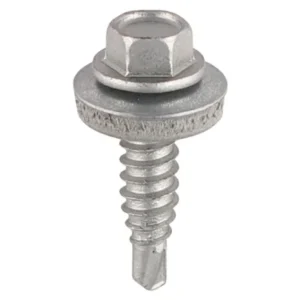
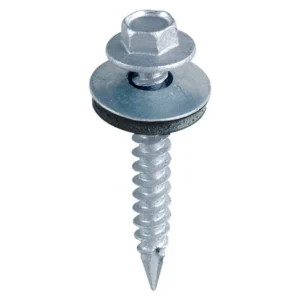
This will depend on your use. If you are creating a temporary roof, using roofing couplers to secure the sheets is recommended. For a permanent cover, you can use screws to attach the sheets to the purlins and to each other.
It is suggested that they should be spaced no more than 1.2m apart, but exact measurements will vary; this is just a guide.
Yes, you can paint them. It will provide an extra durable barrier whilst looking great, and it is advised to use an acrylic-based paint suitable for outdoor use.
As mentioned above, experts recommend an acrylic-based paint or an acrylic latex paint. You must ensure the paint offers UV protection and is weather-resistant.
The screws are fastened to the structural supports, called purlins. It is recommended that these be secured at the crest of the corrugation wave rather than at the lower seam, as this ensures that any water will flow freely.
Yes, they can be stored and stacked neatly.
They are easy to handle because they are lightweight; however, they have sharp edges, so care should be taken. When holding them at height, please be aware of strong winds.
The overall length is the distance measured from one end to the other along the sheeting.
Covered means how much coverage each sheet will give you once it has been overlapped with other sheets. This is approximately 2 inches shorter than the overall size.
Metal Finish/Coating | Description | Corrosion Resistance | Typical Lifespan (UK Conditions) | Appearance | Best For | Notes |
Plain Galvanised (Zinc-Coated) | Hot-dip zinc coating on steel; classic “shiny silver” look that weathers to patina | Good | 20–40+ years | Metallic silver (weathers grey) | Agricultural barns, sheds, and warehouses | Most common & cost-effective; self-healing on minor scratches |
Pre-Painted / Polyester-Coated | Galvanised base + polyester paint layer in various colours | Very Good | 25–50+ years | Coloured (wide range) | Commercial, residential, aesthetic builds | Better UV/fade resistance; popular for modern looks |
Plastisol / PVC-Coated | Galvanised base + thick PVC/plastisol leather-grain finish | Excellent | 30–50+ years | Textured coloured | Harsh environments, coastal areas | Superior scratch/weather protection; leather-like texture |
Galvalume / Aluminium-Zinc | 55% aluminium + 45% zinc alloy coating (not pure zinc) | Superior | 40–60+ years | Dull silver/aluminium sheen | High-corrosion areas (coastal/marine) | 2–4x better edge protection than standard galvanised |
Profile Type | Corrugation Pitch/Depth | Coverage Width (Typical) | Strength & Use Case | Aesthetic / Traditional Feel | Common Thicknesses Available | Why Choose It? |
3-Inch Corrugated (Classic / CI / 13.5/3 or 10/3) | 76mm pitch / ~18–20mm depth | ~610–990mm (lapped) | Excellent water runoff; versatile | Traditional “wriggly tin” | 0.4–0.7mm | Most popular for farms/sheds; strong yet lightweight |
13/3 or Sinusoidal | 76mm pitch / similar depth | Similar to 3-inch | High rigidity; heritage/agricultural | Vintage corrugated iron | 0.5–0.7mm | Timeless look; easy stacking/transport |
Other Modern Profiles (e.g., for comparison) | Varies (shallower/deeper) | Wider coverage options | Better spanning; industrial | Less wavy, more structured | 0.5–0.9mm | Used in commercial; not our current stock focus |
Below is a practical, step-by-step guide based on standard UK best practices. Always prioritise safety (wear gloves, eye protection, and non-slip shoes; use fall protection on roofs), follow manufacturer specs (e.g., BS 3083:1988 for your sheets), and consult a professional if unsure, especially for larger structures.