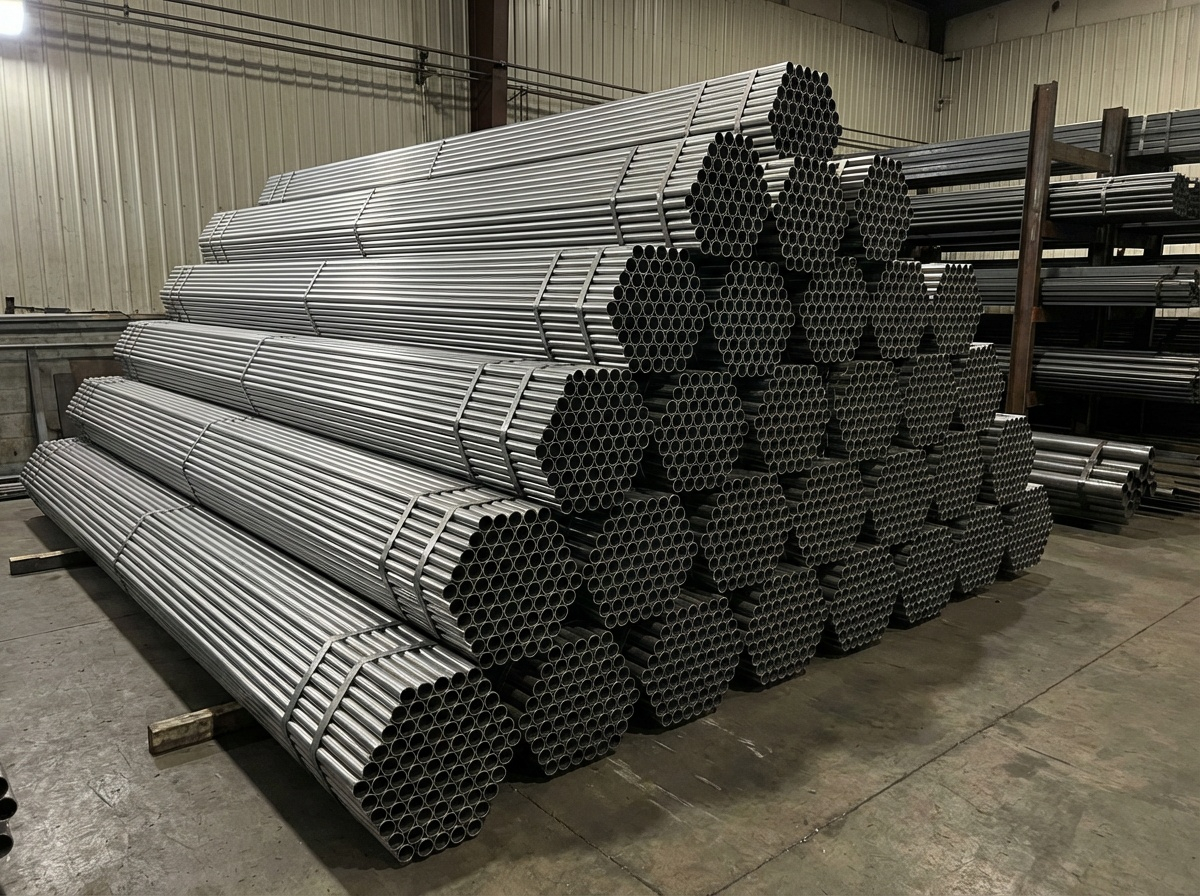
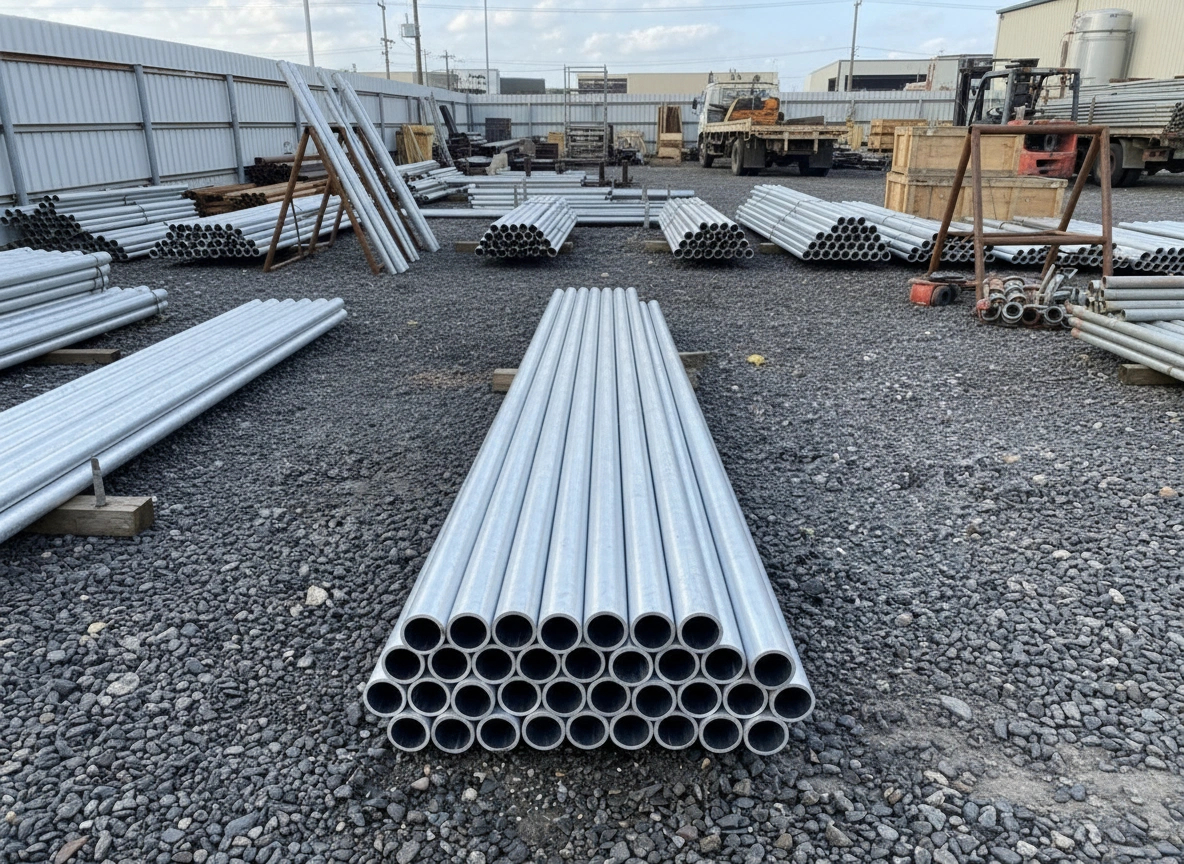
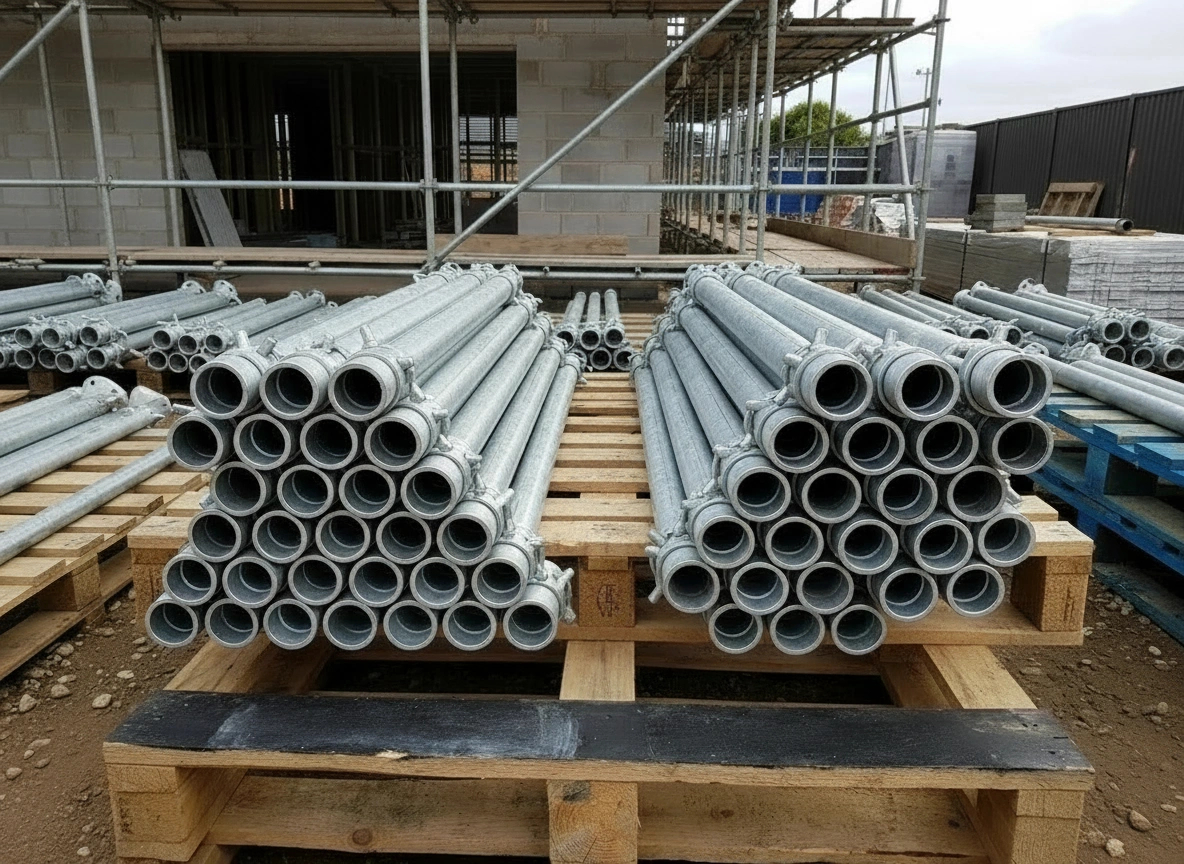
Scaffold tubes form the structural framework of traditional tube-and-fitting scaffold systems. From housebuilding and commercial construction to festivals and industrial shutdowns, selecting the correct tube type is essential for safety, compliance, durability, and cost control.
This guide explains the main types of scaffold tubes used across construction, events, DIY and industrial settings, including standard steel, high-tensile (high-yield), galvanised, and aluminium options, as well as the differences between plain and twist-lock ends.
The most commonly used scaffold tubes in the UK and internationally are galvanised steel tubes manufactured to BS EN 39 specifications.
These tubes typically have an outside diameter of 48.3 mm and a 4.0mm wall thickness. Made from structural steel, they provide excellent load-bearing capacity and are compatible with traditional couplers and fittings.
Standard steel scaffold tubes are widely used in general construction, bricklaying, façade access, and long-term commercial projects. Their strength and durability make them suitable for heavy-duty environments where reliability is critical.
High-tensile scaffold tubes, also known as high-yield tubes, are manufactured from stronger structural steel grades and are commonly compliant with BS EN 10219.
Unlike traditional 4.0mm wall tubes, high-yield versions often use a thinner wall (such as 3.2mm) while maintaining comparable or greater load capacity due to the improved steel strength.
The key advantage is weight reduction. Lighter tubes improve manual handling, reduce transport costs, and speed up erection and dismantling for scaffolders without compromising structural integrity when correctly installed. For large commercial builds or projects with strict handling regulations, high-tensile tubes offer clear operational benefits.
Most modern steel scaffold tubes are hot-dip galvanised to protect against corrosion. This process coats the steel with zinc, forming a durable barrier that resists rust and environmental damage.
Galvanised tubes are considered best practice for outdoor construction projects, particularly in exposed or high-moisture environments. They provide a longer service life and reduced maintenance compared to non-galvanised (often called “black”) steel tubes, which are generally limited to short-term or indoor use.
In the UK construction industry, galvanised scaffold tubes are the standard choice for safety and longevity.
Aluminium poles provide a lightweight alternative to steel while maintaining the standard 48.3mm external diameter for compatibility with fittings.
They are significantly lighter, often 30–40% less than steel, which makes them easier to transport, lift, and assemble. Aluminium also offers natural corrosion resistance without the need for galvanising.
However, aluminium tubes typically have lower load capacity and greater deflection under load than steel tubes. For this reason, they are more commonly used in event staging, exhibition structures, access towers, and indoor maintenance work rather than heavy masonry or high-load industrial scaffolding.
Scaffold tubes are also distinguished by their end type, which affects how they connect within a structure.
Plain-end tubes are cut to square and connected with separate couplers, such as right-angle, swivel, or sleeve fittings. This traditional method offers maximum flexibility and is widely used in tube-and-fitting scaffolding systems.
Twist-lock tubes, which sometimes incorporate integrated spigots or connection mechanisms, are designed to speed up vertical assembly. They reduce reliance on separate sleeve couplers and are often used in system scaffolding (Ringlock or Kwikstage) or projects with repetitive layouts where rapid erection is a priority.
The choice between plain and twist-lock tubes depends on the scaffolding system in use, project timeline, and design requirements.
Scaffold tubes aren’t one-size-fits-all; their type dictates the perfect fit for your gig. Here’s a quick breakdown of standout uses:
Selecting the appropriate scaffold tube depends on structural load requirements, environmental conditions, project duration, and handling considerations. For heavy-duty construction, galvanised high-tensile steel remains the industry benchmark. For lightweight, temporary, non-load-bearing, or event-based structures, aluminium may offer efficiency advantages.
Regardless of the material choice, scaffold tubes should always meet recognised manufacturing standards and be specified in accordance with structural calculations and site-specific risk assessments. Compliance and proper design are essential to ensure safety, performance, and regulatory adherence.
Understanding the differences between standard, high-yield, galvanised, and aluminium scaffold tubes allows contractors, site managers, and event professionals to make informed, safety-led decisions that support both operational efficiency and long-term durability.