




Checkout to get your delivery cost
Based in West Sussex
Trusted by customers
Discounts on large orders
£33.50 ex. VAT
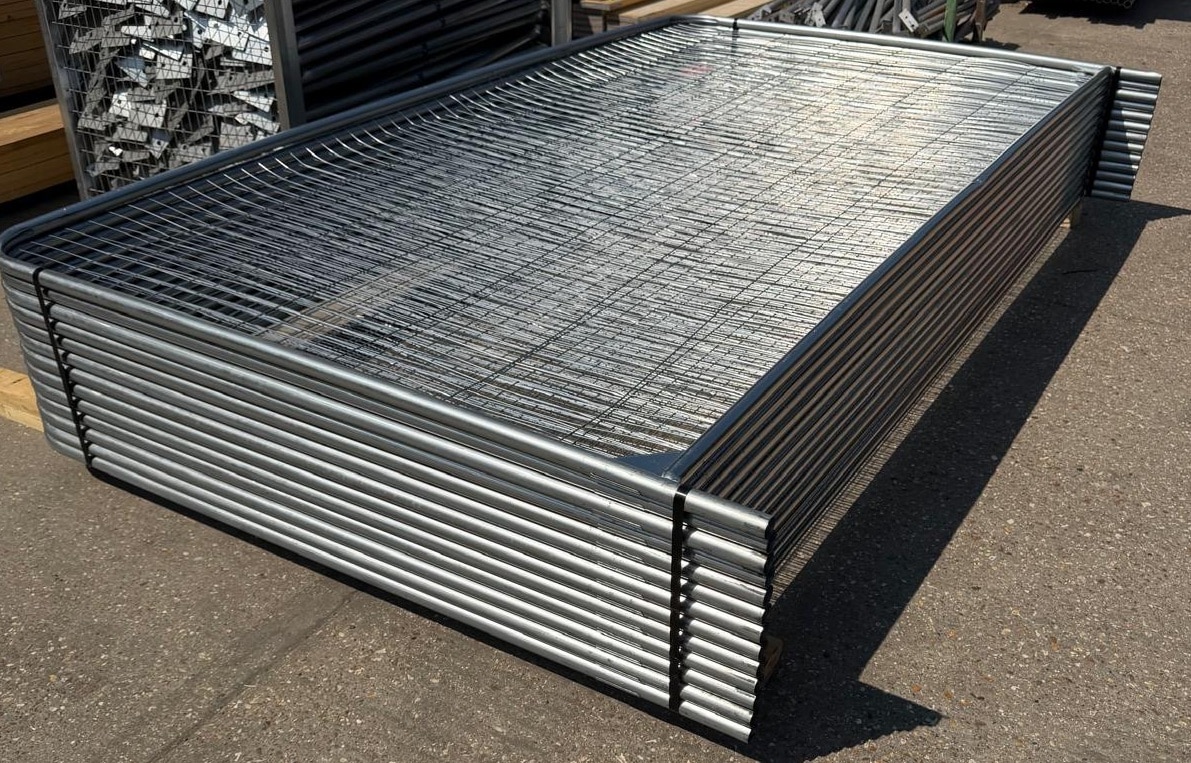
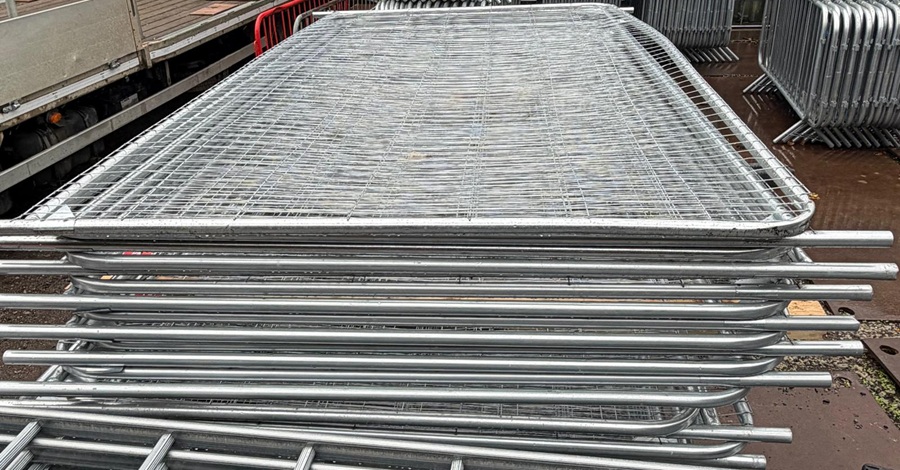
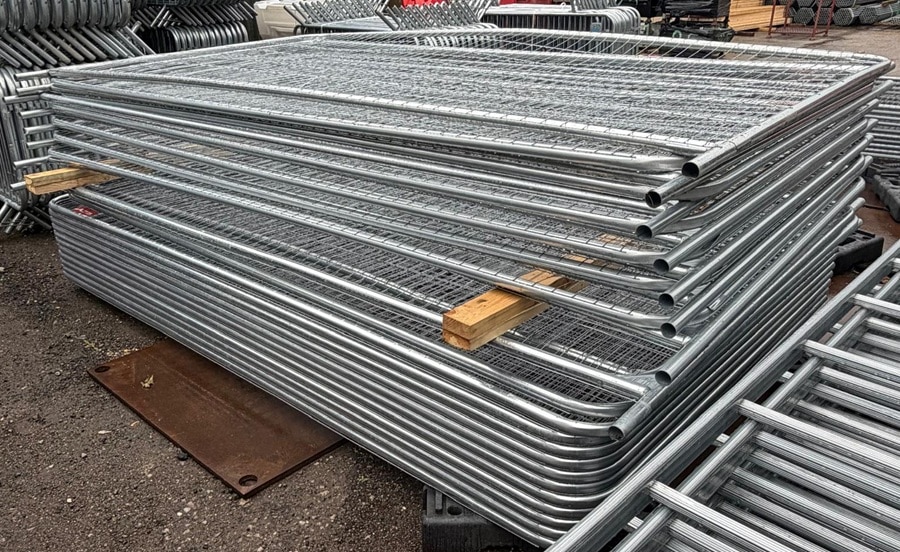
These heavy-duty Heras fence panels are a top choice for temporary security fencing, offering robust protection against unauthorised access. Made from galvanised steel with SmartWeld technology for extra strength, each panel measures 3.45m long by 2m high and weighs just 14kg, making them easy to handle while providing anti-climb mesh to deter intruders. They’re weather-resistant, reusable, and compliant with HS(G)151 standards, perfect for securing construction sites, events, or open areas with reliable stability.
Checkout to get your delivery cost
Sussex Depote
Trusted by customers
Best prices
When it comes to keeping your site safe and secure without the hassle of permanent installations, Heras fence panels stand out as a reliable, go-to solution. These heavy-duty panels are engineered for demanding environments, blending lightweight design with uncompromised strength to create barriers that last. Whether you’re managing a bustling construction project or organising a large outdoor event, these panels deliver peace of mind by preventing climbing attempts and withstanding everyday wear and tear. Crafted in the UK tradition of quality temporary fencing, pioneered back in the 1950s, they feature a solid round top and fully welded construction that eliminates weak points. Customers love how they strike the perfect balance: tough enough for professional use but straightforward to set up and dismantle. Plus, their galvanised finish resists rust, keeping them in top condition through rain or shine. If you’re looking for fencing that prioritises safety, durability, and ease, these panels check all the boxes, helping you focus on what matters most: getting the job done efficiently.
| Feature | Details |
| Dimensions | Length: 3.45m (3450mm), Height: 2m (2000mm) |
| Weight | 14kg per panel |
| Material | Galvanised steel with anti-climb mesh infill |
| Frame | Tubular outer frame, fully welded using SmartWeld technology (no joints for added resilience) |
| Finish | Zinc-coated for rust and corrosion resistance |
| Style | Solid round top with anti-climb design |
| Accessories Needed | Rubber or hi-vis feet, couplers (clamps) |
| Compliance | Meets HS(G)151 health and safety guidelines |
| Load Capacity | Designed for heavy-duty use; stable when installed with stabilisers on uneven ground. |
Heras fence panels are incredibly versatile, making them a staple in various industries. On construction and demolition sites, they create secure perimeters to protect workers, equipment, and passersby from hazards. For outdoor events like festivals, concerts, markets, or sports gatherings, they’re ideal for crowd control, guiding foot traffic, and keeping unauthorised folks out. Property owners often use them for temporary privacy around swimming pools, gardens, or storage areas. In public settings, such as protests or fairs, they help maintain order while being quick to deploy. Even for smaller jobs, like securing displays or materials overnight, these panels provide a flexible, reusable barrier that’s far more effective than basic alternatives.
Safety is at the heart of these Heras panels. The anti-climb mesh features tightly spaced wires embedded in the tubing, making it nearly impossible for intruders to gain a foothold. If someone tries to tamper with it, the wire stays lodged, maintaining the barrier’s integrity. For optimal stability, especially on soft or uneven ground, we recommend adding backstay stabilisers that slot into the rubber feet or pin down securely. Installation is straightforward but best done with two people: space the feet 3.45m apart, insert the panel legs, and connect with couplers at the top and bottom. To achieve full compliance in high-security areas, incorporate hi-vis feet and anti-tamper couplers; these ensure the setup complies with UK government HS(G)151 guidelines, which focus on public protection and risk reduction.
They’re weather-resistant for year-round use, indoors or out, and their reusable nature makes them cost-effective over time. Remember, a complete setup typically requires one foot per panel (plus an extra for the end) and two couplers per panel; calculate based on your perimeter needs. If you’re enclosing an area fully, adjust to one foot and two couplers per panel exactly. For enhanced access, pair with compatible gates, such as vehicle or pedestrian options.
It is a metal mesh fence that provides a lightweight, temporary barrier to secure and protect construction sites, properties, and outdoor events.
The mesh has narrow spacing that prevents fingers or toes from gripping, and the wires are secured inside the frame so they can’t be easily removed or bent.
It depends on your perimeter: measure the total length, divide by 3.45m, then add extras for gates or corners. We can help with a free quote!
Yes, just feet, panels, and couplers. No special tools needed, though a mallet can help on hard ground.
Yes, feet and couplers are essential to create a perimeter. You may also need stabilisers and ballast blocks for additional protection, pedestrian/vehicle gates if you require access to your perimeter.
It’s a welding method that fuses two steel pieces into a seamless tube, boosting strength without joints that could weaken over time.
They meet HS(G)151 standards but always use hi-vis elements in public areas to ensure full adherence.
We have vehicle and pedestrian gates that integrate seamlessly for easy access points.
This anti-climb mesh fence has been constructed so that the wire is fixed inside the outer tubing and remains firmly lodged inside the frame, even if broken. This mesh prevents intruders from climbing the panels because the wire spacing prevents a foothold.
They are pretty sturdy when installed correctly with the feet and clips; however, if you want to increase stability, you should use a backstay stabiliser. The stabilisers can either fit into the holes of the rubber feet or, if placed on soft ground, be secured with stabiliser pins.
Yes, they perform well on uneven surfaces when paired with adjustable stabilisers or backstays. Rubber feet help on hard ground, while concrete or pin-down feet provide extra grip on soft or sloped terrain. Always check stability after installation, especially in windy conditions.
Yes, lightweight banners, Heras-printed mesh covers, or warning signs can be cable-tied or clipped securely in place. Avoid heavy sheeting or solid panels that significantly increase wind resistance, as this can compromise stability. Use anti-tamper fixings where security is a priority.
When connected with standard couplers, panels sit flush with minimal gap (under 5mm). This creates a continuous barrier with no large openings at joints. For maximum security, use anti-tamper or tamper-evident couplers to prevent easy disconnection.


Reviews
There are no reviews yet.