

Checkout to get your delivery cost
Based in West Sussex
Trusted by customers
Discounts on large orders
£3.50 ex. VAT
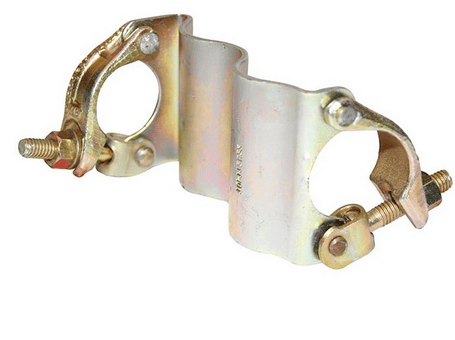
Roofing Couplers are specialised scaffolding fittings used to securely fix corrugated roofing sheets to scaffold tube frameworks, allowing the creation of safe, stable temporary roof structures. They are commonly used to provide effective weather protection during building works, preventing rain, wind, and debris from disrupting construction, renovation, or maintenance projects. By forming a temporary roof above working areas, roofing couplers help keep sites operational in poor weather and protect materials, equipment, and interior spaces below.
Checkout to get your delivery cost
Sussex Depote
Trusted by customers
Best prices
Roofing Couplers are specialised scaffolding fittings used to securely fix corrugated roofing sheets to scaffold tube frameworks, allowing the creation of safe, stable temporary roof structures. They are commonly used to provide effective weather protection during building works, preventing rain, wind, and debris from disrupting construction, renovation, or maintenance projects. By forming a temporary roof above working areas, roofing couplers help keep sites operational in poor weather and protect materials, equipment, and interior spaces below.
Designed for use across construction sites, agricultural buildings, and refurbishment projects, these couplers offer a fast and reliable solution where permanent roofing is impractical or unnecessary. Manufactured from durable pressed steel with a galvanised finish, they deliver long-lasting performance while maintaining high standards of safety and ease of use. Suitable for both professional contractors and DIY scaffolding setups, they help form stable roofing assemblies capable of withstanding challenging UK weather conditions.
Perfectly compatible with a wide range of corrugated roofing sheets, these couplers remove the need for drilling or permanent alterations, making them a practical and versatile addition to any scaffolding kit. Available in standard sizes to fit 48.3mm scaffold tubes, they allow for quick installation and straightforward dismantling, helping to save time and reduce labour costs on site.
Our roofing couplers are designed for dependable performance, making them a practical choice for scaffolding professionals and site teams alike.
These features make roofing couplers a reliable, long-lasting component in any temporary roofing or scaffolding system.
Our roofing couplers meet rigorous industry standards to guarantee safety and compatibility. Here’s a breakdown of the essential specs:
Specification | Details |
Material | Pressed steel with galvanised coating for corrosion resistance |
Compatible Tube Diameter | 48.3 mm (standard scaffolding tubes) |
Sheet Compatibility | Corrugated sheets up to 3.0 mm combined thickness; fits 0.7 mm gauge with 76.2 mm pitch. |
Weight | Approximately 1.0 kg per unit |
Load Bearing | Non-load-bearing; designed for sheet securing only |
Compliance Standards | BS 1139, EN 74, and BS 2482:2009 for quality and safety assurance |
Finish | Hot-dip galvanised for enhanced durability. |
These specs ensure our couplers integrate smoothly into your scaffolding setup, providing a secure hold without added complexity.
Roofing Couplers – £3.75 ex. VAT each. Bulk discounts apply to larger orders. Contact us for a quote or to discuss custom quantities. Fast delivery across the UK, or collect from our West Sussex depot.
For optimal results, follow these steps to install your roofing couplers safely and effectively:
Pro Tips: Always position couplers on corrugation highs for maximum grip. Avoid overloading the assembly, and inspect for wear before reuse. Common mistakes include misalignment – double-check sheet placement to prevent slips.
A roofing coupler is a specialised clamp that fastens corrugated sheets to scaffold tubes to create temporary roofs. It grips the sheet between two halves without drilling, using the tube for leverage to hold everything in place.
They are optimised for standard corrugated profiles with a thickness of up to 3.0 mm and a pitch of 76.2 mm. For non-standard sheets, consult our team to confirm compatibility.
Installation requires only a scaffold spanner and is simple, making these suitable for fast on-site setups.
We recommend at least two per sheet, placed at the ends. For larger sheets or exposed locations, add one in the middle for extra stability.
Yes, they’re entirely reusable. Clean after use, store in a dry place, and inspect for damage to ensure ongoing performance.
They are non-load-bearing and meant solely for securing sheets. Do not use them to support workers or heavy loads – rely on the scaffold structure for that.
| Roof Exposure / Conditions | Recommended Couplers per Sheet | Spacing Along Sheet (approx.) | Additional Notes |
|---|---|---|---|
| Sheltered / Low Wind (e.g., urban sites, short-term) | 2 (one at each end) | Ends only | Standard for most small projects; sufficient for basic weather protection. |
| Moderate Exposure (typical UK sites, medium spans) | 3 (ends + one in middle) | ~1.2–1.6 m centres | Add middle coupler for sheets over 3 m long or moderate wind zones. |
| High Wind / Exposed (coastal, open fields, longer spans) | 4+ (ends + multiples in middle) | 0.8–1.2 m centres | Use extra for uplift resistance; consider supplementary edge strapping or bracing. Always site-assess wind loads. |
| Steep Pitch (>15°) or Snow-Prone Areas | 3–4 | Closer on lower sections | Position extra couplers lower down to handle gravity/shear; consult engineer for loads. |
Pro Tip: Position all couplers on the high points (crests) of the corrugations for maximum grip. Overlaps between sheets should be at least one full corrugation.
No, drilling is not necessary. One of the main advantages of roofing couplers is their drill-free installation. They grip the corrugated sheet between two halves (a lower and an upper scaffold tube) by clamping onto the sheet’s profile without making any holes or modifications. This keeps the sheets intact, speeds up setup, and makes disassembly/reuse straightforward. Just position the coupler to match the corrugation, sandwich the sheet, and secure with the tubes.
Our roofing couplers comply with key UK and European scaffolding standards, including BS 1139 (for metal scaffolding components) and EN 74 (for couplers used with steel tubes). They also align with BS 2482:2009 guidelines for temporary access and working structures. These ensure the couplers meet requirements for material quality, corrosion resistance (via a galvanised finish), and safe performance in non-load-bearing applications such as sheet fastening. They are non-load-bearing fittings, designed specifically for securing sheets rather than supporting workers or heavy loads.
To minimise lifting, flapping, or wind uplift on corrugated sheets:
Roofing couplers use a simple nut-and-bolt mechanism on the scaffold tubes — tighten firmly with a standard scaffolding spanner (or impact wrench on pulse mode) until the assembly feels secure with no gaps or play. There’s no specific torque value listed for these specialised pressed-steel fittings (unlike standard right-angle/swivel couplers, which often reference ~50–54 Nm per EN 74 testing). Aim for a “hand-tight plus a good pull” level to ensure the sheet is clamped solidly without deforming the coupler or stripping threads. Over-tightening can bend the pressed steel or damage components, while under-tightening risks slippage. Always check for movement after initial setup and re-tighten if needed after wind exposure or vibration.
For more details or expert advice on integrating roofing couplers with your project, get in touch with our team today. We’re here to support your scaffolding needs with reliable products and professional guidance.



Reviews
There are no reviews yet.