


Checkout to get your delivery cost
Based in West Sussex
Trusted by customers
Discounts on large orders
£90.41 – £124.60Price range: £90.41 through £124.60 ex. VAT
When it comes to reliable site protection in the UK construction industry, our standard scaffold sheeting, available in a convenient 45m roll, stands out as a versatile and budget-friendly solution for everyday scaffolding needs.
Checkout to get your delivery cost
Sussex Depote
Trusted by customers
Best prices
Designed for projects where basic weather shielding and containment are priorities, this high-quality polyethylene-based sheeting helps safeguard your worksite from rain, wind, and environmental elements without the added complexity of specialised fire-rated materials.
Ideal for short-term builds, residential renovations, or low-risk commercial jobs, it ensures smoother operations by minimising disruptions from debris scatter or moisture ingress. With options in 2m or 3m widths, this roll provides ample coverage for standard scaffold structures, promoting efficiency and compliance with general safety protocols. Whether you’re a contractor seeking durable enclosure options or a builder focused on cost control, this sheeting delivers consistent performance backed by proven manufacturing standards, making it a staple for scaffolding professionals aiming to optimise project timelines and site integrity.
| Specification | Details |
| Roll Length | 45 meters |
| Available Widths | 2 meters or 3 meters |
| Material Composition | Reinforced low-density polyethylene (LDPE) with woven scrim for added strength |
| Weight (Approximate) | 150-170 gsm |
| Color | Typically clear or translucent white for visibility |
| UV Resistance | Built-in stabilisers for prolonged outdoor exposure |
| Tear Resistance | High tensile strength to withstand typical site conditions |
| Compliance | Meets UK industry guidelines for general containment and protection |
| Packaging | Rolled for easy transport and storage |
| Application Type | Suitability Level | Why It Fits |
| Residential Scaffolding | High | Provides affordable weatherproofing for home extensions or repairs, keeping interiors dry during work. |
| Small Commercial Builds | High | Effective for containing dust and noise in urban settings without requiring advanced certifications. |
| Temporary Site Enclosures | Medium-High | Offers quick setup for short-duration projects such as painting or minor demolition. |
| Low-Risk Industrial Use | Medium | Suitable for non-hazardous environments where basic barrier protection is sufficient. |
| Heritage or Sensitive Sites | Low-Medium | Best for preliminary stages; consider upgrades for extended exposure. |
Monarflex sheeting has a lot of benefits:
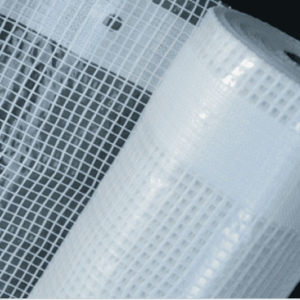
Monarflex scaffold sheeting is made from a reinforced woven material, which is then protected by two layers of LDPE – low-density polyethylene. The woven section, also known as scrim, is made from polyester yarn and comes in two thicknesses: 1100 and 1670 Decitex (DTEX). It also adheres to British Standards BS 7955:1999 and BS 8410:2007.
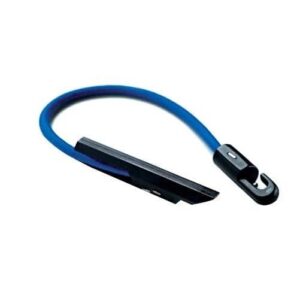
Bungee cords are typically used to secure the sheeting to the scaffold framework, as they are flexible and easy to install thanks to their elasticated cord and piercing toggle, which easily fits the holes in the Monarflex sheet.
Standard scaffold sheeting focuses on core functionality, such as weather resistance and debris control, making it a cost-effective choice for everyday use. Unlike variants with added properties, it prioritises simplicity and ease of deployment for projects without specific regulatory demands.
Select based on your scaffold height and coverage needs – 2m rolls are great for lower structures or tighter budgets, while 3m options provide broader protection for taller setups, reducing the number of seams and potential weak points.
Yes, with proper care, it can be reused across multiple jobs if not damaged. Clean it after use, roll it tightly to avoid creases, and store it in a dry, shaded area to maintain its integrity and extend its service life.
Basic elastic ties or clips are recommended for fastening to scaffold frames. Ensure even spacing along the eyelets for stability, and always perform a site-specific check to account for local wind patterns.
While it’s supplied in standard form, many users add site-specific markings or logos using compatible printing methods. Contact our team for advice on personalisation options that won’t compromise the material’s durability.
Most scaffold sheeting is not fire-retardant; however, we do offer flame-retardant sheeting.
This sheeting is engineered for resilience against typical British weather conditions, such as rain and moderate winds, and helps maintain dry working areas. For extreme conditions, pair it with reinforced anchoring to enhance stability.
While DIY is possible for small-scale use, we recommend consulting qualified scaffolders to ensure safe attachment and compliance with health and safety best practices, especially on larger sites.
A 2m wide roll covers approximately 90 square meters, while a 3m wide roll covers about 135 square meters (based on full unrolled length, excluding overlaps). Factor in 10–20% extra for overlaps and trimming to ensure complete enclosure without gaps.
In average UK conditions, expect 6–12 months of reliable service for short- to medium-term projects. Factors such as constant sun exposure, frequent high winds, or mechanical damage can shorten its lifespan; inspect regularly and replace torn sections promptly.
Yes, as a solid barrier, it effectively contains everyday construction dust and small debris, preventing scatter into neighbouring areas; ideal for residential or commercial jobs where basic pollution control is needed without specialised setups.
It offers solid resistance to rain, moderate wind, and typical seasonal changes, keeping work areas drier and more comfortable. In very exposed or stormy conditions, use additional ties and check fixings frequently to maintain stability.
Yes, it is the ideal solution for covering temporary roof scaffolds, provided the scaffolding is designed to withstand the additional wind loads. Always consult a qualified scaffolder for safe configuration.
Measure the total perimeter height and length of the scaffold area to enclose. Divide the height by your chosen roll width (2m or 3m), then multiply by the length to estimate the number of rolls required. Add 15–25% for overlaps, corners, and waste; however, this is just a guide.
Perform visual checks weekly for tears, loose fixings, or excessive flapping. Gently clean off dirt with mild soapy water if needed, avoid abrasive tools, and tighten or replace ties as required to prevent wind damage.
Yes, it handles frost, light snow, and cold weather effectively for weatherproofing. Snow accumulation may add load, so clear excess buildup and ensure proper overlaps to direct runoff away from the structure.
Unlike permeable mesh debris netting (which allows airflow but limited weather blocking), standard solid sheeting creates a complete barrier for better rain protection, dust control, and privacy, making it more versatile for jobs where keeping the interior dry and contained is key.
Tensile strength is the force required to stretch the Monarflex sheet until it breaks or tears. It represents the maximum stress the polyethylene material can endure before it is considered unsuitable for use. Measurements are taken at 50mm intervals to ensure accuracy.
Yes, the bungee ties we offer are made from high-quality elastic and can be used to attach any type of scaffold sheet to a structure. They have been manufactured to British Standard BS7955 and tested to withstand strong winds.
However, these ties have also been designed to detach themselves in extremely high winds, thereby reducing the pressure on the tubular framework to which they are attached. The ties are placed through the eyelet hole of the scaffold sheeting fabric. It is recommended that, when installing a 2m roll of Monarflex, 150 ties be used to secure it to the structure, with a minimum of 1m between each tie in either a horizontal or vertical direction. You can purchase bungee ties in packs of 100 from us that will secure Monarflex sheeting rolls to any scaffold tube framework.
Roll Width | Roll Length | Approximate Coverage (m², no overlaps) | Recommended for Scaffold Height (with 150–300mm overlaps) | Typical Project Examples |
2 meters | 45 meters | 90 m² | Up to ~6–8m high elevations (fewer seams) | House extensions, small facades, and low-level repairs |
3 meters | 45 meters | 135 m² | Up to ~9–12m high elevations (broader coverage, quicker install) | Medium residential blocks, small commercial builds, ground + first floor enclosures |
Benefit | Description | Why It Matters for Everyday Projects |
Cost-Effective | Lower price point compared to specialised variants | Ideal for budget-conscious short-term jobs |
Easy Handling & Storage | Lightweight rolls (approx. 20–35 kg depending on width), compact when rolled | Simple transport in vans or site storage |
Basic Weather Shielding | Waterproof and wind-resistant for typical UK conditions | Minimises rain delays on non-hazardous sites |
Good Light Diffusion | Translucent material allows natural daylight through | Reduces the need for extra site lighting during work |
Reusability Potential | Can be carefully removed, cleaned, and stored for multiple short projects | Helps control costs on repeat or phased work |
| Width | 2m, 3m |
|---|
Reviews
There are no reviews yet.