


Checkout to get your delivery cost
Based in West Sussex
Trusted by customers
Discounts on large orders
£170.99 – £248.41Price range: £170.99 through £248.41 ex. VAT
Our fire-retardant scaffold sheeting delivers essential flame resistance, reliable weather protection, and effective site containment on temporary roof scaffolds for construction, refurbishment, and high-risk projects across the UK.
Checkout to get your delivery cost
Sussex Depote
Trusted by customers
Best prices
Manufactured from reinforced polyethylene with integrated flame-retardant additives, this heavy-duty material self-extinguishes when exposed to fire sources, helping reduce the risk of fire spread on scaffolds. It is particularly valuable near occupied buildings, during hot works, or on projects subject to insurance requirements or the Joint Code of Practice (JCC) for fire protection on construction sites.
At West Sussex Scaffolding, we supply premium 45m rolls in 2m and 3m widths, designed for easy attachment to tube-and-fitting or system scaffolds. Compliant with key standards including BS 7955:1999 for general scaffold sheeting performance and third-party certified flame-retardant equivalents (e.g., TS62/TS63 external use criteria via Certifire or LPCB), our sheeting is ideal for low- to medium-rise buildings, asbestos abatement enclosures, heritage projects, and commercial developments where fire safety is critical.
The white translucent finish allows diffused natural light while maintaining privacy, dust control, and debris containment.
Choose local expertise: collect from our Aldingbourne yard or arrange fast nationwide delivery (2–5 business days). Contact us at 0800 1337934 for site-specific advice, free quotations, or to confirm compatibility with your scaffold design.
Feature | Fire-Retardant Sheeting (Our Supply) | Standard Non-FR Sheeting |
Flame Performance | Self-extinguishing; third-party certified (e.g., TS62/TS63 equivalent, BS 476 compliant) | Basic resistance only; no certified FR properties |
Primary Applications | High-risk sites, near buildings, hot works, asbestos/lead enclosures | General low-risk weather protection |
Compliance Focus | Supports JCC insurance requirements, HSE fire regs | BS 7955:1999 general performance |
Material Weight (approx.) | 170–180 gsm reinforced polyethylene | Similar, but without FR additives |
Roll Sizes Available | 2m or 3m width × 45m length | Same |
Colour & Light | White translucent (70–80% light transmission) | Often similar |
Wind Load Consideration | Requires scaffold redesign/assessment | Same, but lower priority in low-risk sites |
Best For | Safety-critical, regulated, or public-facing projects | Budget short-term builds |
All rolls are supplied ready for installation, with eyelets or reinforced edges for secure fixing. For lower-risk sites without flame-retardant requirements, consider our standard scaffold sheeting 45m roll as a cost-effective alternative covering.
On larger projects (often over £2.5m or part of bigger developments), insurers and the Joint Code of Practice (JCC) mandate third-party certified flame-retardant materials to mitigate fire risks during construction. Even on smaller jobs, it’s essential to comply with HSE requirements and reduce liability near occupied structures, timber elements, or activities involving sparks or flames.
Our fire-retardant scaffold sheeting meets BS 7955:1999 for general performance. It incorporates flame-retardant properties aligned with third-party certifications such as TS62/TS63 (Certifire/LPCB equivalents for external scaffold use), Euroclass ratings (e.g., B-s1,d0 to EN 13501-1), and BS 476 Part 12C ignition resistance where applicable. Always verify the latest certification for your project.
Unlike permeable TS62 flame-retardant netting (which allows airflow but limited weatherproofing), solid fire-retardant sheeting creates a complete enclosure for superior rain/dust/noise control while maintaining self-extinguishing fire performance. It increases wind loading, so the scaffold must be engineer-assessed.
Yes, fire-retardant variants are widely used for negative-pressure enclosures in asbestos removal, lead paint stripping, or contaminated dust control. Pair with proper ventilation, overlaps, and sealing tape per HSE HSG210 guidelines.
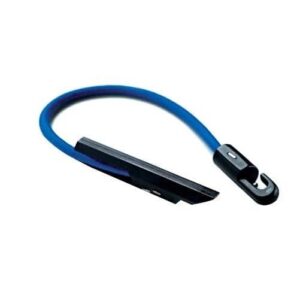
Use trained scaffolders only. Overlap sheets externally (like roof tiles) by 150–300 mm, fix with elastic bungee toggle ties every 300–600 mm, and ensure the scaffold is designed for increased wind loads (per BS EN 12811-1 and TG20:21). Add vents for airflow in enclosed setups.
Yes, if undamaged after removal, however, you should inspect for tears, clean gently, and store rolled. Reusability makes it cost-effective compared to single-use alternatives like shrink wrap.
Yes, many contractors add company logos or safety messages via compatible printing on the outer face, turning the enclosure into visible branding without compromising fire performance.
It means that once the flame source is removed, the material stops burning within seconds and does not continue to propagate fire along the sheet. This is a critical difference from non-FR sheeting, which can melt, drip, and feed a fire.
Yes, prolonged exposure to a direct flame or very high temperatures can still cause localised burning or melting. FR sheeting is designed to resist ignition and limit spread, not to be completely fire-proof. Always use cold-cutting methods or approved hot knives with care.
Yes, almost always on commercial contracts. We can supply the relevant third-party test certificates (e.g., Certifire, LPCB, or manufacturer’s declaration of performance) with every order; just request them at checkout or by phone.
Yes. Basic flame-retardant sheeting meets general standards (e.g., BS 476), while LPS 1207 or TS62 certification is a higher, independently tested level specifically recognised by loss adjusters and insurers for external scaffold enclosures in the UK.
Typically 9–18 months in UK weather conditions, depending on exposure to UV, wind abrasion, and mechanical damage. The FR additives do not reduce durability compared to standard sheeting.
Yes, many contractors use the same fire-retardant 45m rolls for both vertical enclosure and temporary roof applications, provided the scaffold is designed to accommodate the additional loads and the overlaps are correctly weather-lapped.
For certified FR performance, white is the standard (and usually the only certified colour). Some suppliers offer printed or coloured versions, but these may not carry the same third-party certification.
A 2m × 45m roll weighs approximately. 28–32 kg; a 3m × 45m roll weighs approx. 42–48 kg. Two people can comfortably lift and position them on most sites.
Certification / Marking | Meaning | Typically Accepted By | Common on UK Sites? |
BS 476 Part 6 & 7 Class 1 | Basic surface spread & ignition resistance | Smaller/low-risk jobs | Sometimes |
Euroclass B-s1,d0 | European reaction-to-fire rating | EU/UK projects requiring CE/UKCA | Increasingly common |
LPS 1207 / TS62 | Loss Prevention Certification Board standard for external scaffold sheeting | Insurers, principal contractors, JCC | Most commercial sites |
Certifire CF550 / CF551 | Independent third-party scheme | High-value or high-rise contracts | Frequently required |
Fixing Method | Wind Resistance Level | Ease of Installation | Reusability | Typical Spacing | Notes |
Standard Bungee Ties | Low–Medium | Very easy | High | 400–600 mm | Good for general use |
Toggle Ties / Flexities | Medium | Easy | High | 300–500 mm | Popular for FR sheeting |
Anchor & Strap System | High | Moderate | High | 200–400 mm (edges) | Best for exposed sites |
Cable Ties (rigid) | Very High | Easy | Low | N/A – avoid | Not recommended – can overload the scaffold |
Project Type | Why FR Sheeting is Usually Mandatory |
School or hospital refurbishments | Occupied buildings + hot works |
Residential blocks over 18m | Building Regs & insurance requirements |
Asbestos removal enclosures | Negative pressure + fire risk from cutting tools |
Heritage/listed building works | Proximity to irreplaceable timber/thatched structures |
Retail units in shopping centres | Public access + strict insurer protocols |
Modern fire-retardant scaffold sheeting (meeting TS62/TS63 or Euroclass B-s1,d0) is formulated to produce limited smoke and droplets (s1 and d0 classifications). While no plastic material is completely non-toxic when burning, certified FR grades significantly reduce smoke production and flame spread compared to untreated polyethylene.
| Width | 2m, 3m |
|---|

Reviews
There are no reviews yet.