

Checkout to get your delivery cost
Based in West Sussex
Trusted by customers
Discounts on large orders
£2.25 ex. VAT
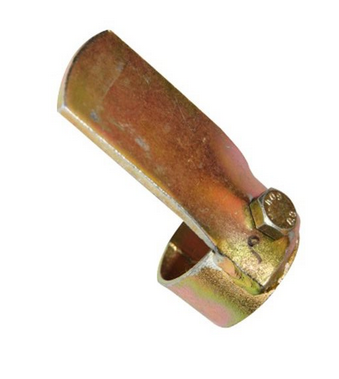
The Putlog Head Adaptor transforms ordinary scaffold tubes into reliable putlogs effortlessly. This essential scaffolding fitting converts standard 48.3mm diameter steel scaffold tubes into spade-ended putlogs, ideal for tying scaffolds directly into brick or block walls. Weighing just 0.4kg and crafted from tough, zinc-plated pressed steel, it’s designed to withstand the demands of the site while remaining lightweight for easy handling. The straightforward bolt-tightening design ensures a rock-solid connection without the need for specialist tools—simply slide it on, tighten, and insert. Non-load-bearing but focused on stability, it meets BS 2482:2009 standards, offering peace of mind on every job.
Checkout to get your delivery cost
Sussex Depote
Trusted by customers
Best prices
Our Putlog Head Adaptor stands out by bridging the gap between versatile scaffold tubes and traditional putlog needs, saving you time and hassle on progressive builds or renovations. Whether you’re a seasoned scaffolder or managing a smaller site, this adaptor’s eco-friendly, galvanized finish resists corrosion, and its compact design slips easily into your toolkit. We’ve sourced it from trusted UK manufacturers to deliver that pro-grade reliability you expect. For full putlog scaffolds, pair with our single putlog couplers to securely connect transoms/putlogs to ledgers at 90°, ensuring flush wall ties and stable platforms in line with TG20:21 guidelines.
Feature | Details |
Material | Zinc-plated pressed galvanized steel |
Tube Compatibility | 48.3mm diameter (steel or aluminum; check load ratings for aluminum) |
Weight | 0.4kg (approx.) |
Dimensions | Fits standard tube ends; spade blade approx. 100mm long x 25mm wide |
Load Type | Non-load-bearing (stability tie only) |
Finish | Hot-dipped galvanized for corrosion resistance |
Compliance | BS 2482:2009; suitable for TG20:21 designs |
Quantity per Pack | Sold individually |
Condition | Brand new, factory-sealed |
This adaptor shines in scenarios where direct wall integration is key. On new-build bricklaying projects, slide it onto a tube end and embed the spade into fresh mortar joints every 1-2 meters to support transoms and ledgers ideal for keeping scaffolds flush against rising walls. For renovations or extensions, it provides temporary anchorage in existing masonry, allowing phased work without full disassembly. It’s also a go-to for lightweight aluminum setups in domestic jobs, like facade repairs, where mobility trumps heavy-duty forging. Avoid using it for primary load support; instead, combine with couplers for hybrid systems on uneven sites. Scaffolders love how it adapts second-hand tubes, extending their life and cutting costs on inventory.
Safety isn’t optional—it’s engineered in. Our Putlog Head Adaptor is non-load bearing, designed purely for secure, temporary ties to prevent scaffold drift, but always integrate it into a full TG20:21-compliant design from a qualified engineer. Tighten the bolt hand-firm with a spanner (torque to 40-50Nm) and test for wobble before loading platforms. Regular inspections for tube straightness, rust, or bolt wear are a must, per HSE guidelines—replace if any damage shows. It leaves minor holes in joints, so point them over post-removal to dodge water issues. Fully compliant with BS 2482:2009 for pressed fittings, it’s tested for drop and impact resistance, ensuring it holds up in wet UK weather. For removal, loosen fully and tap gently; store dry to maintain that galvanized edge.
Yes, it fits 48.3mm tubes of either material, but for aluminum, confirm your scaffold’s overall load capacity as it’s lighter-duty.
Slip it over the clean tube end, thread the bolt through, and tighten until snug—no power tools needed. Then push the spade into a 50-75mm deep mortar joint.
Sure, as long as the tube is straight, undamaged, and exactly 48.3mm. Give it a quick visual check to avoid slippage.
Follow your site plan, but typically every 1.2-2m along the wall, matching board lengths for even support.
A traditional forged putlog is a complete, one-piece heavy-duty tube with a built-in spade end, often stronger for repeated heavy use. Our adaptor is a lightweight, cost-effective pressed steel fitting (just 0.4kg) that lets you convert any standard 48.3mm tube into a putlog on the spot—perfect for flexibility, using spare tubes, or smaller jobs where you don’t need forged durability every time.
It grips best on clean, straight 48.3mm tubes (steel or aluminium). Minor surface rust or light wear is usually fine after a quick clean. Still, if the tube is bent, heavily corroded, or undersized, the adaptor may not seat securely, always inspect and visually check the tube to prevent slippage.
It leaves small, temporary holes in the mortar joints, standard for putlog systems. After dismantling, simply fill with matching mortar and point over for a neat, weatherproof finish. This is quick and prevents any long-term water ingress issues.
Yes, it’s a hot-dipped galvanised finish that resists corrosion, and the pressed steel holds up well with proper care. After use, fully loosen the bolt (apply penetrating oil if stuck), clean off any mortar residue, and store it dry. Regular inspection for cracks or bolt wear keeps it reliable for many jobs.
Aim for 50-75mm deep into a fresh or sound mortar joint for a solid hold without risking damage to the brickwork. In new builds, insert as the wall rises; for existing structures, choose joints that align well. Always test for firmness before adding weight to the platform.


Reviews
There are no reviews yet.